


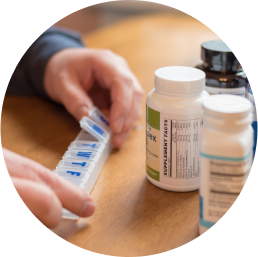
Thorough Medication Review
Every patient at Southwest Pain Management receives a comprehensive medication review. We examine all current prescriptions — including those from other providers — along with over-the-counter medications and supplements. This allows us to identify potential drug interactions, redundancies, and opportunities for optimization.

Individualized Medication Plans
No two patients experience pain the same way, which is why medication management for chronic pain must be tailored to each individual. Factors we consider include:
- The type and location of your pain
- The underlying cause of your condition
- Your medical history and coexisting conditions
- Previous medications tried and their effectiveness
- Your personal treatment goals and lifestyle
Opioid Management
For patients who require opioid therapy, we follow strict evidence-based guidelines to ensure safe prescribing. Our opioid management program includes:
- Careful patient screening and risk assessment
- Use of the lowest effective dose for the shortest necessary duration
- Regular monitoring with urine drug testing and prescription drug monitoring program (PDMP) checks
- Ongoing evaluation of pain levels, function, and side effects
- Tapering support when it’s time to reduce or discontinue opioid therapy
We understand that opioids remain an important tool for certain patients, and we prescribe them responsibly when other options have been exhausted or are insufficient.
Non-Opioid Medication Options
Many chronic pain conditions respond well to non-opioid medications, and we prioritize these alternatives whenever possible. Options include:
- NSAIDs(nonsteroidal anti-inflammatory drugs) — for inflammatory pain conditions
- Muscle relaxants— for muscle spasm-related pain
- Anticonvulsants(gabapentin, pregabalin) — for nerve pain and neuropathy
- Antidepressants(duloxetine, amitriptyline) — proven effective for chronic pain, fibromyalgia, and neuropathic pain
- Topical medications— creams, patches, and gels that deliver pain relief directly to the affected area
- Corticosteroids— short-term use for acute inflammatory flares
Medication-Assisted Treatment (MAT)
Southwest Pain Management also provides medication-assisted treatment for patients who have developed opioid dependence or opioid use disorder. MAT combines FDA-approved medications — such as buprenorphine (Suboxone) — with counseling and behavioral support to help patients safely reduce or eliminate opioid use while managing their underlying pain.
Side Effect Monitoring and Drug Interaction Management
Long-term medication use requires vigilant monitoring. We track patients for common and serious side effects including gastrointestinal issues, liver and kidney function changes, sedation, and cognitive effects. Our team also manages complex drug interactions, especially for patients taking multiple medications for pain and other health conditions.
Benefits of Professional Pain Medication Management
- Optimized pain relief— the right medication at the right dose for your specific condition
- Reduced side effects— ongoing monitoring catches problems early
- Safer opioid use— responsible prescribing with regular oversight
- Fewer drug interactions— comprehensive review of all medications
- Better quality of life— coordinated care that addresses the whole patient
- Peace of mind— knowing your medications are being managed by experienced specialists
For most patients on chronic pain medications, follow-up appointments are scheduled every 1–3 months. Patients on opioid therapy may need to be seen monthly, especially when starting or adjusting a medication. As your treatment stabilizes, visit frequency may decrease. Dr. Morgan will determine the right schedule based on your individual needs.
Yes. A pain management specialist like Dr. Morgan can prescribe new medications, adjust dosages, switch you to more effective alternatives, and safely taper medications that are no longer needed. We coordinate with your primary care physician and other specialists to ensure seamless care.
Medication-assisted treatment combines FDA-approved medications — such as buprenorphine (Suboxone) or naltrexone — with counseling and behavioral therapy to treat opioid dependence. MAT is considered the gold standard for opioid use disorder treatment and is available at Southwest Pain Management.
Absolutely. Many chronic pain conditions respond well to non-opioid options including anticonvulsants, antidepressants, anti-inflammatory medications, topical treatments, and muscle relaxants. Dr. Morgan prioritizes non-opioid approaches whenever possible and will work with you to find the most effective combination for your pain.
Medication management visits are typically covered by most health insurance plans, including Medicare. Your cost depends on your specific plan’s copays and deductible. The medications themselves vary in cost — many effective non-opioid pain medications are available as affordable generics. Our team can discuss cost-effective treatment options with you.
Not necessarily. The goal of medication management is to achieve optimal pain control while working toward reducing or eliminating the need for medications when possible. Many patients find that combining medication with physical therapy, injections, and lifestyle modifications allows them to decrease their medication use over time.
If your current medication becomes less effective — a phenomenon sometimes called tolerance — Dr. Morgan has many options available. These include adjusting the dose, switching to a different medication in the same class, adding a complementary medication, or incorporating non-medication treatments such as injections or physical therapy.