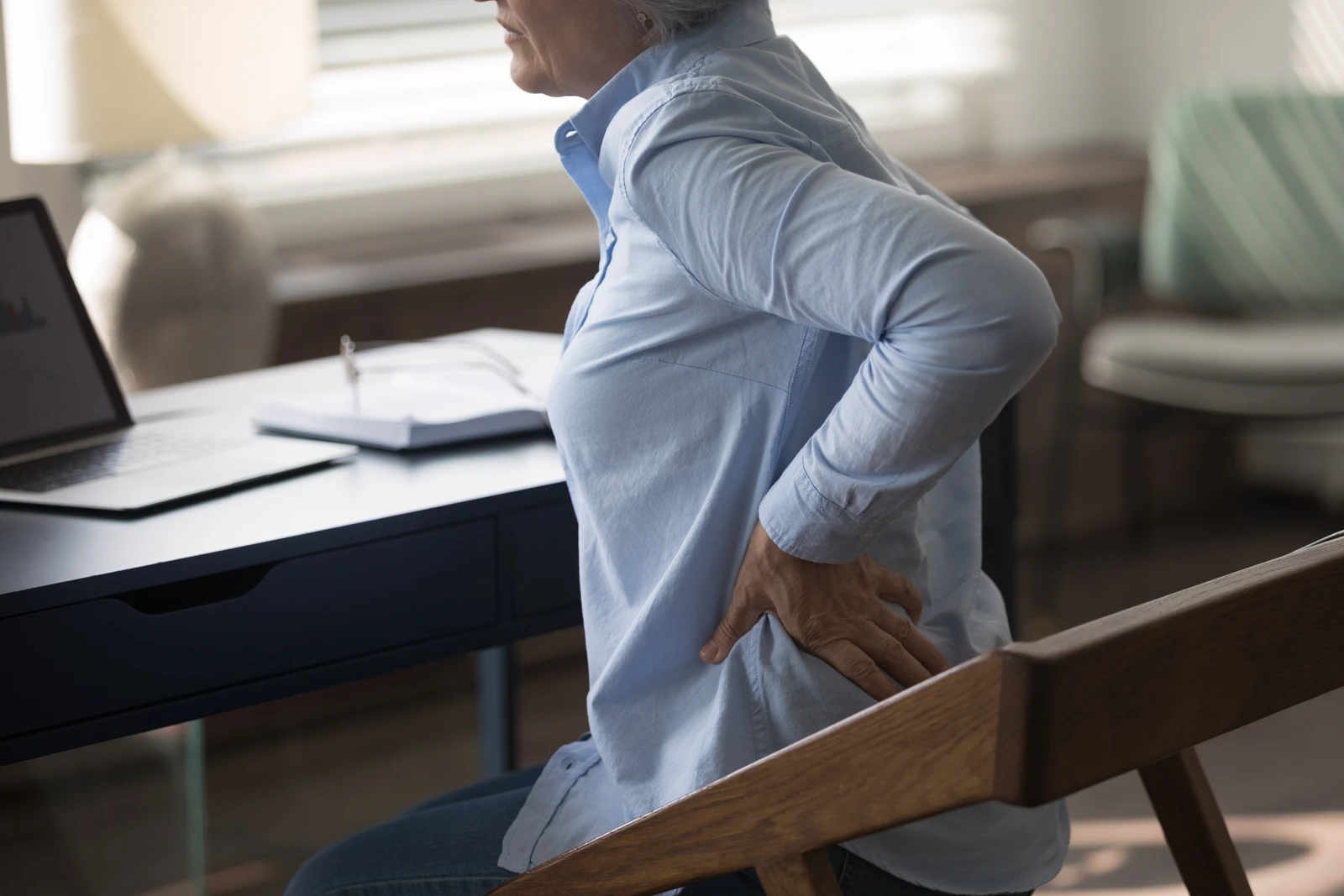


Spinal stenosis is a common cause of back and leg pain in older adults, and it has a specific clinical pattern that often leads to a specific treatment decision. Many patients arrive at a pain management consultation with spinal stenosis already diagnosed and a recommendation for surgery already on the table. This guide explains what stenosis is, what is and is not known about how it progresses, and what non-surgical options exist.
What Spinal Stenosis Is
Spinal stenosis is narrowing of one or more of the spaces in the spine that nerves pass through. The narrowing can affect the central canal (where the spinal cord and nerve roots run), the openings where nerve roots exit the spine (neural foramina), or both.
The narrowing typically develops slowly over years, driven by age-related changes: disc degeneration that reduces disc height, bone spur formation, thickening of the ligaments within the spine, and arthritic changes in the facet joints. When the narrowing reaches a point where it affects nerve function, symptoms develop.
Stenosis can occur in any part of the spine but is most common in the lumbar and cervical regions.
The Classic Pattern
Lumbar spinal stenosis has a characteristic clinical pattern that is often distinctive enough to suggest the diagnosis before imaging:
- Pain and heaviness in the lower back and legs that worsens with standing and walking
- Relief with sitting, leaning forward, or squatting
- The “shopping cart sign” — patients can walk much farther if they can lean forward (as when pushing a cart)
- Symptoms that are usually bilateral (both legs), though not always symmetric
- Walking tolerance that decreases over time
This pattern is called neurogenic claudication and contrasts with vascular claudication (from poor circulation), which is caused by a different mechanism and has slightly different features. The distinction is important because the treatments differ.
Cervical spinal stenosis presents differently:
- Progressive changes in hand coordination — dropping objects, difficulty with buttons, handwriting changes
- Difficulty with balance, especially on uneven surfaces or in the dark
- Changes in gait
- Pain in the neck, arms, or hands, sometimes with numbness or tingling
- In more advanced cases, changes in bladder or bowel function
Cervical stenosis with these features (particularly balance and coordination changes) is often more urgent than lumbar stenosis because of the potential for spinal cord compression.
How Stenosis Is Diagnosed
History. The pattern of symptoms is often suggestive enough to strongly consider stenosis.
Physical examination. Specific tests for strength, reflexes, sensation, and balance. In cervical stenosis, examination of upper motor neuron signs.
Imaging. MRI is the most informative study. It shows the soft tissues, the narrowing of the canal and foramina, and related changes. X-rays show alignment and bone changes. CT myelography is sometimes used when MRI is contraindicated.
Additional testing. Sometimes nerve conduction studies, EMG, or specific physical therapy evaluation.
What Stenosis Is Not
A few points worth being clear about:
Stenosis on imaging does not automatically mean surgery. Many people have MRI findings of stenosis without significant symptoms. The decision to treat, and how aggressively, depends on the clinical picture — how much pain you have, how it affects your life, and how stable or progressive it is.
Stenosis is usually not an emergency. Most cases develop slowly over years and can be managed thoughtfully over time. Certain features — significant progressive weakness, balance and coordination changes from cervical stenosis, new bladder or bowel dysfunction — warrant more urgent evaluation.
Stenosis does not reliably progress to paralysis. For most patients, symptoms fluctuate and may worsen slowly over years, but the catastrophic outcomes people fear are uncommon with good ongoing care.
Non-Surgical Treatment for Lumbar Stenosis
For lumbar spinal stenosis, several non-surgical options can be effective:
Activity modification. Leaning-forward activities (stationary bike, walking with a rolling walker) are typically better tolerated than upright activities. Many patients can maintain their fitness with modifications.
Physical therapy. Specific physical therapy approaches for stenosis focus on core and hip strength, flexion-based exercises that open the spinal canal, and sometimes traction. A therapist experienced with stenosis can make a meaningful difference.
Medication management. Non-opioid analgesics, anti-inflammatory medications, and nerve-pain medications may all have a role.
Epidural steroid injection. Lumbar epidural steroid injections can provide relief for patients with stenosis, though the response pattern is sometimes different from patients with disc-mediated pain. Some patients get meaningful relief; others do not respond as well. When an injection works, it can provide months of improved function.
Weight management. When relevant, reducing excess weight meaningfully decreases the load on the spine and can reduce symptoms.
When Surgery Is Considered
Surgery for lumbar stenosis is typically considered when:
- Non-surgical measures have been adequately tried without sufficient improvement
- The patient’s walking tolerance has decreased to a level that significantly affects quality of life
- Progressive neurological symptoms are present
- The patient’s overall health supports surgery
The most common surgical approach is a lumbar decompression, sometimes combined with fusion if there is associated instability. Surgery has good outcomes for appropriately selected patients but is not appropriate for everyone.
A pain management consultation can help you think through whether surgery is the right next step for your specific situation.
Cervical Stenosis: A Different Decision
Cervical stenosis with myelopathy (spinal cord compression) often has a different decision calculus than lumbar stenosis. Progressive symptoms from cervical myelopathy can lead to permanent neurological deficits if not addressed. For patients with clear cervical myelopathy, surgical consultation is typically earlier in the treatment course than it is for lumbar stenosis.
That said, cervical stenosis without myelopathy is often managed non-surgically, similar to lumbar stenosis.
The Role of Minimally Invasive Procedures
For some patients with lumbar stenosis, certain minimally invasive procedures can provide an option between traditional non-surgical management and open surgery. These include interspinous spacers and other procedures that aim to create more space for the affected nerves with less recovery than traditional surgery. Whether these options are appropriate depends on specific anatomy and clinical factors.
What a Pain Management Specialist Offers
For spinal stenosis, a pain management practice contributes in several ways:
- Comprehensive evaluation that considers the whole clinical picture
- Appropriate use of epidural injections for symptom management
- Medication management tailored to the specific situation
- Coordination with physical therapy
- Honest discussion of when surgical consultation is the right next step
- Ongoing management for patients who do not choose surgery or for whom surgery is not the right option
Spinal Stenosis Care at Southwest Pain Management
Our clinics treat patients with spinal stenosis across the spectrum — those at an early stage, those managing chronic stenosis, and those weighing surgical decisions. Our team is led by Philip Morgan, MD.
Frequently Asked Questions
Will spinal stenosis get worse over time? Many cases do progress slowly, but the trajectory varies significantly between patients. Some maintain stable symptoms for years; others progress more quickly. Regular reassessment helps match treatment to current status.
Is surgery the only way to treat stenosis? No. Many patients are managed effectively without surgery.
How long do epidural injections help with stenosis? This varies considerably — weeks to months — and some patients do not respond as well as those with disc-mediated pain.
Can I exercise with spinal stenosis? Usually yes, with appropriate guidance. Flexion-based activities (stationary bike, walking with support) are often better tolerated than extension-based activities.
What should I do if I cannot walk as far as I used to? Discuss this with your specialist. Decreasing walking tolerance is a meaningful clinical change and often prompts reassessment of the treatment plan.
Is stenosis surgery risky? Like any surgery, it has risks. Outcomes for appropriately selected patients are generally good. A pain management consultation can help you think through the decision.
What is myelopathy? Myelopathy refers to spinal cord dysfunction. Cervical stenosis with myelopathy produces specific symptoms — changes in balance, coordination, and hand function — that typically warrant earlier surgical consultation than stenosis without myelopathy.
Request a Consultation
Contact Southwest Pain Management to schedule an evaluation.
Our Mission
The mission of Southwest Pain Management is to empower you to restore function, decrease pain, and live your life to its fullest.
Contact Us